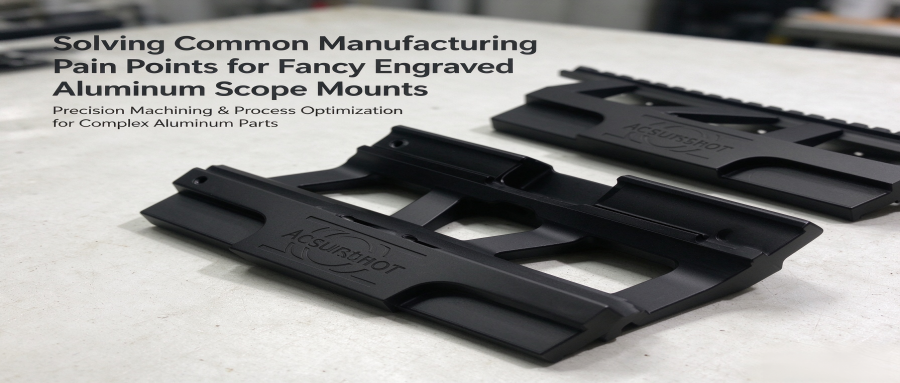
Introduction For mechanical engineers, product designers and procurement managers developing custom optical hardware such as engraved aluminum scope mounts, three recurring manufacturing headaches frequently affect final yields: burrs generated during complex multi-tool machining, surface scratches caused by handling and clamping, and inconsistent tone in anodizing color. Even with correct drawings and proper aluminum alloy selection, these issues can lead to rejected parts during prototype development or unstable quality in batch production. Many OEM manufacturers struggle to balance decorative engraving detail, tight CNC tolerance, and reliable cosmetic performance. This article breaks down practical engineering solutions for burr control, surface protection and uniform anodized finish, supporting better DFM decisions for optical-grade aluminum components.
Controlling Burrs from Complex Multi-Tool Machining
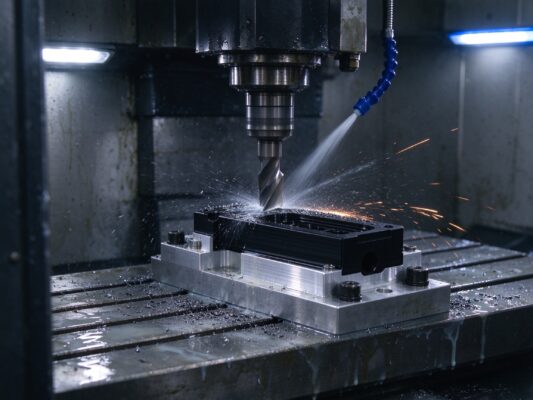
Fancy-engraved aluminum scope mounts require complex multi-tool paths combining contour milling, decorative engraving, drilling and tapping. Frequent tool changes and intersecting cutting edges are major sources of micro burrs. Burrs often appear on engraving pattern edges, thread openings and sharp transitional corners, which complicate later assembly and damage visual quality.
Good CNC aluminum machining practice starts with optimized tool-path programming. Engineers can adopt step-down cutting strategies and built in CNC deburring cycles instead of fully depending on manual work. Following DFM guidelines, avoid ultra-thin material margins on carving edges; thin fragments tear easily and create hard-to-remove burrs. After multi-tool processing, parts go through dedicated deburring and cleaning procedures as part of standard quality control. This prevents tiny burrs from remaining in grooves or threaded holes of decorative optical accessories.
Surface Protection Against Scratches in Full Workflow
Decorative scope mounts demand high-grade appearance, so scratch prevention runs through every stage from aluminum extrusion profiles blank feeding to final packaging. Scratches usually come from direct metalto-metal contact during clamping, transferring and stacking between processes. Even precise surface finishing cannot erase deep mechanical scratches. We apply protective film and soft-material fixtures during CNC aluminum machining to avoid tool-clamp marks. Between operations, workpieces are placed on special soft trays rather than piled together randomly. Operators handle components with gloves. These standardized handling rules protect pre-machined surfaces before anodizing, brushing or sandblasting. Every link is recorded in internal quality control checklists, lowering scrap rates in batch production.
Achieving Consistent Color for Anodizing Treatment
Uneven anodizing color is a well-known risk for intricately machined aluminum parts. Differences in material texture, residual cutting fluid, local stress from multi-tool cutting, and uneven current contact all result in poor surface consistency. For engraved scope mounts, deep carving grooves make liquid circulation harder, further increasing color-difference risks.
Reliable aluminum alloy selection is the foundation; consistent-grade raw aluminum extrusion profiles reduce inherent color deviation. Before surface treatment, thorough cleaning removes cutting oil and debris inside engraving slots. Fixture points are reasonably arranged to guarantee equal electric current distribution. After anodizing, dimensional inspection and visual color comparison are performed batch-wise. This stable process supports high-demand optical hardware together with our OEM/ODM aluminum manufacturing capability.
Conclusion Complex multi tool cutting, scratch risks in workpiece handling, and uneven anodizing color are three typical pain points for engraved fancy aluminum scope mounts. Optimized tool paths plus systematic deburring solve burr troubles. Full-process surface protection avoids accidental scratches. Strict pre-treatment cleaning and standardized anodizing fixtures ensure good surface consistency. All these measures should be considered at the DFM stage, whether you carry out prototype development or large-scale batch production.
Litailong provides complete OEM/ODM aluminum manufacturing for precision optical aluminum components. Our CNC aluminum machining, drilling and tapping, engraving and surface-treatment services help mechanical engineers, product designers and procurement managers resolve appearance-related manufacturing challenges.
CTA If you have projects for engraved aluminum optical parts, welcome to send drawings for our technical review.